
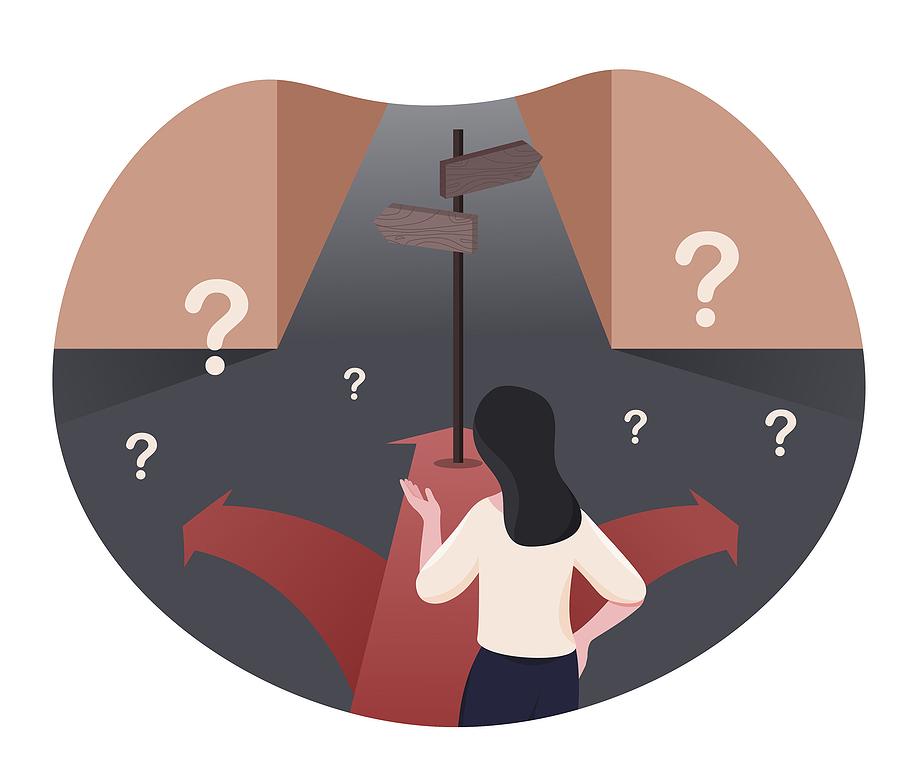

There is a predictable moment in a practitioner’s development that almost no training body serves, and I think it is the most underserved moment in this entire industry.
It arrives about a month after certification.
The relief of finishing has worn off. The first few clients have come through the door. And somewhere in the third or fourth session with one of them, the method runs out before the client does.
Nothing has gone wrong. You did the training properly. You are applying it correctly. The client is engaged and working. And you can feel, with complete clarity, that you have reached the end of what you were given and the client is still standing in the middle of something.
WHAT THAT MOMENT ACTUALLY IS
It is not a competence failure, although it is almost universally experienced as one.
Every method has a domain. Inside that domain it is powerful, which is why you trained in it. Outside that domain it does not become weaker, it becomes irrelevant, and the transition between those two states is abrupt rather than gradual. One session you are working with precision. The next you are improvising and hoping the rapport carries it.
The reason this lands so hard a month after certification is timing. You have just spent a year and a significant sum being told this method works. It does work. Nobody told you where its edges were, because training bodies are not incentivised to map the boundaries of their own product.
So the practitioner concludes the problem is them. They book supervision, they reread the manual, they consider whether they are cut out for this. The one explanation they do not reach for is that they have simply arrived at the far side of a finite tool.
WHAT THE TRAINING BODIES OFFER AT THAT POINT
I went looking at what the major trauma and attachment certifications actually provide their own graduates once they hit this.
Mostly three things. Recertification, which is the same material again. Repeating the mentorship, which is the same material with supervision attached. Or volunteering, which is more hours of the same practice. Some offer an alumni community, a members’ area, an annual retreat, a private group.
Belonging is pleasant, and for an isolated practitioner it is not nothing. But belonging is not capability. A community will help you feel less alone with the looping client. It will not give you anything new to do on Thursday.
WHY ANOTHER QUALIFICATION IS THE WRONG ANSWER
The obvious move is to train in something else. Many practitioners do, and end up with three or four certifications and the same underlying problem, because each one is another self-contained domain with its own abrupt edge.
Somebody who has just spent a year and several thousand pounds to qualify does not want to start another year from scratch. They are not short of hours. They are short of a specific capability at a specific point, and the industry keeps answering that with a general qualification.
What is missing is a layer, not a replacement. Something that makes the qualification you already hold work harder at exactly the place it currently stops.
WHAT CHANGES WHEN THE NEXT STEP IS A LAYER
You stop paying to relearn what you already know. A specialist capability assumes your existing training rather than duplicating it, which is why it takes weeks rather than another year.
Your existing certification starts earning properly. The method you trained in was never wrong, it was just bounded. Extending the boundary makes the original investment more valuable, not less.
The looping client stops being evidence against you. Once you can see that the client is outside your method’s domain rather than resistant to it, the whole diagnosis changes, and so does what you do next.
You get specific rather than confident. General confidence is what a community gives you. A capability is what changes the session.
HOW TO CHOOSE WHAT COMES NEXT
Ask what specifically stopped. Not the client, and not you. The method. Name the exact point in the work where it ran out.
Then ask whether the next thing you are considering addresses that point or simply adds hours around it. If the answer describes a duration rather than a capability, it is probably the wrong purchase.
And ask what it requires of your existing training. Anything that asks you to set that aside and begin again is asking you to pay twice for something you already own.
THE EDGE IS INFORMATION
If you certified in the last couple of years and you have felt that moment arrive, I would say this plainly. The wall you hit is not a verdict on your ability. It is a map of your method, and it is the most useful piece of information you have received since you qualified, because it tells you exactly what to go and get.
The practitioners who go furthest are not the ones who never reach the edge. They are the ones who recognise the edge for what it is and stop treating it as a personal failing.
If you want a specialist forensic layer that sits on top of the training you already hold, the Validate Certified Coach certification is built precisely for this point. It assumes you are already a capable practitioner and gives you the pattern analysis that your existing method was never designed to provide, for the clients who keep going round in circles for reasons neither of you can yet name.