
Most people think abuse only happens when someone gets hurt physically.
But years before a relationship becomes violent, if it ever does, there are patterns running underneath. Patterns that confuse you, disorient you, and erode your sense of self. Patterns that make you question your own reality.
There’s always an algorithm underneath.
I spent thirty years reverse-engineering how people actually change, and then I built AI that finds the structure most people can’t see. The pattern beneath manipulation. The mechanism hiding in workplace communications. The fog that makes you think you’re going mad.
Now I build instruments that let you see it too.








In my TEDx talk, I showed what Validate AI can do. Real communication. Real analysis. Real coercive control identified at a stage early enough to recognize it before it becomes undeniable.
That’s the entire point.
By the time coercive control is obvious, it’s usually been running for years. The fog doesn’t lift when someone finally raises their voice. It lifts when you can see the pattern clearly enough to trust what you already know.


It was 11 pm. I was hungry. I stood in the kitchen holding a tin of soup, wrestling between hunger and fear.
When he walked in thirty minutes later, I knew from the sound of the key in the lock that he was angry. “Oh, I see you made yourself something to eat then.”
If you’ve never lived inside coercive control, that sentence probably doesn’t sound frightening. There was no shouting. No threat. It was soup.
But I knew instantly I’d broken the rules. What I felt was guilt and shame. I should have waited. I should have known.
That is the fog.
Coercive control changes what things mean. Hunger becomes selfishness. A perfectly ordinary decision becomes something you need permission for. Another person’s anger becomes proof you’ve done something wrong.
I was groomed at twelve and spent five years inside a controlling relationship. When I got out at twenty, I had no idea how to trust my own judgment about anything. So I went and found out.
That took engineering, a PhD in mathematical modelling, and about as much therapy, psychology and behaviour-change work as a person can get through. I kept asking all of it the same question, because I am incapable of leaving anything mysterious alone: what actually creates the change? What has to happen first? What can be reproduced?
That question became the work. More than twenty years of teaching it and extracting the methodology underneath transformation, so that real change becomes reliable and repeatable instead of something that only happens when the right person is in the room.
Everything I build now comes out of that. Instruments that make an invisible pattern visible, and processes that change what happens next.
The fog doesn’t clear when somebody tells you what to think. It clears when you can see enough to think for yourself.
That’s why I built these instruments.
One reads relationships. One reads workplaces. One reads spiritual communities. One reads coaching dynamics.
All four do the same thing: they find the pattern everyone else insists isn’t there.
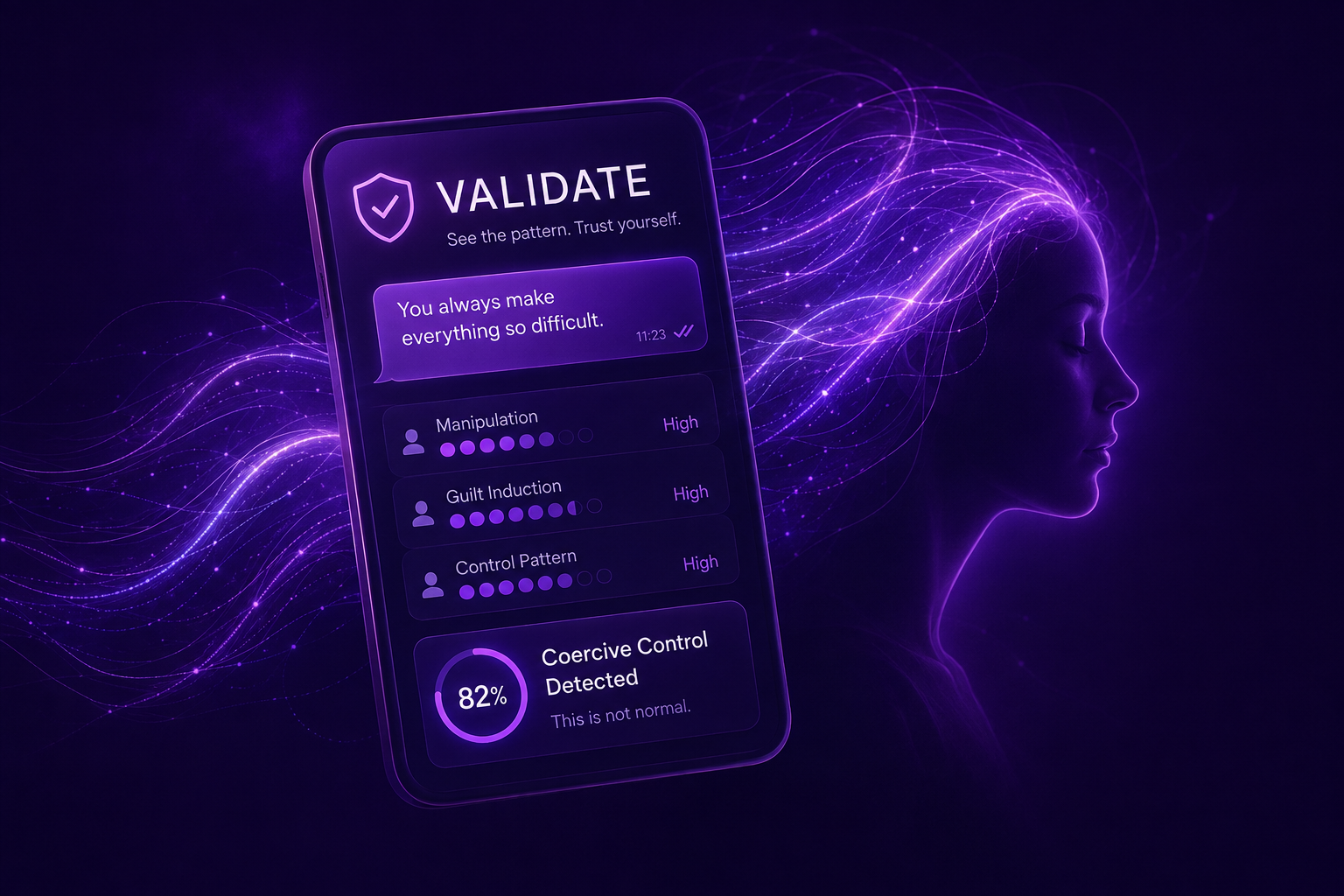
For anyone questioning a relationship
Analyse real conversations to uncover patterns of coercive control, manipulation and toxic behaviour that can be difficult to see when you’re living inside them. Validate shows you the behaviours, their severity and the exact words behind each finding.
Not sure what you’re experiencing yet? Start with the private 3-minute Relationship Clarity Check to see whether there’s a pattern worth looking at more closely.
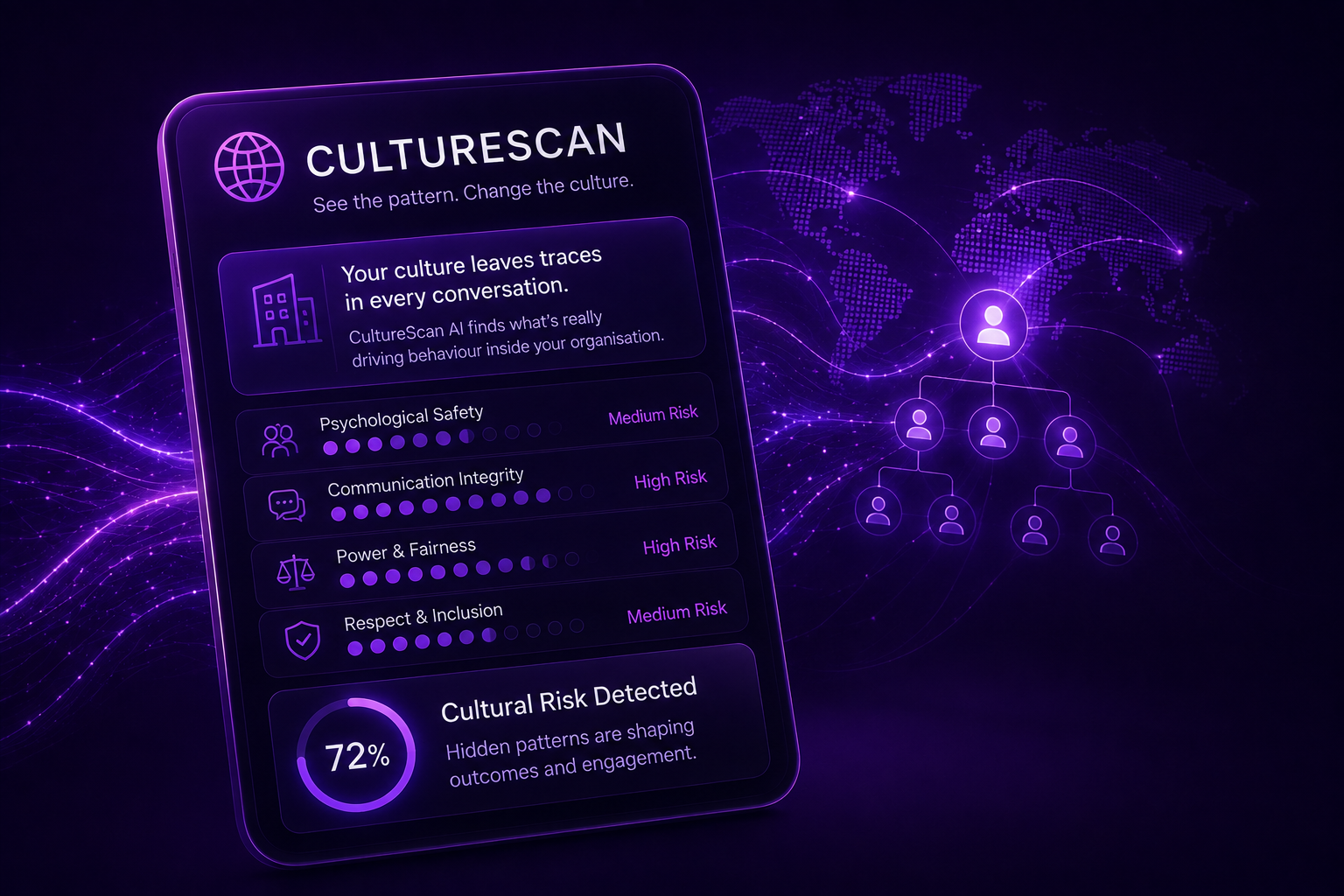
For HR, legal and compliance professionals
See the pattern that individual incidents miss. CultureScan analyses workplace communications over time to surface patterns of bias, microaggressions, power dynamics and bullying across hundreds of interactions.
If you need to understand what’s really happening across your organisation, book a consultation to discuss your situation and scope a CultureScan analysis.
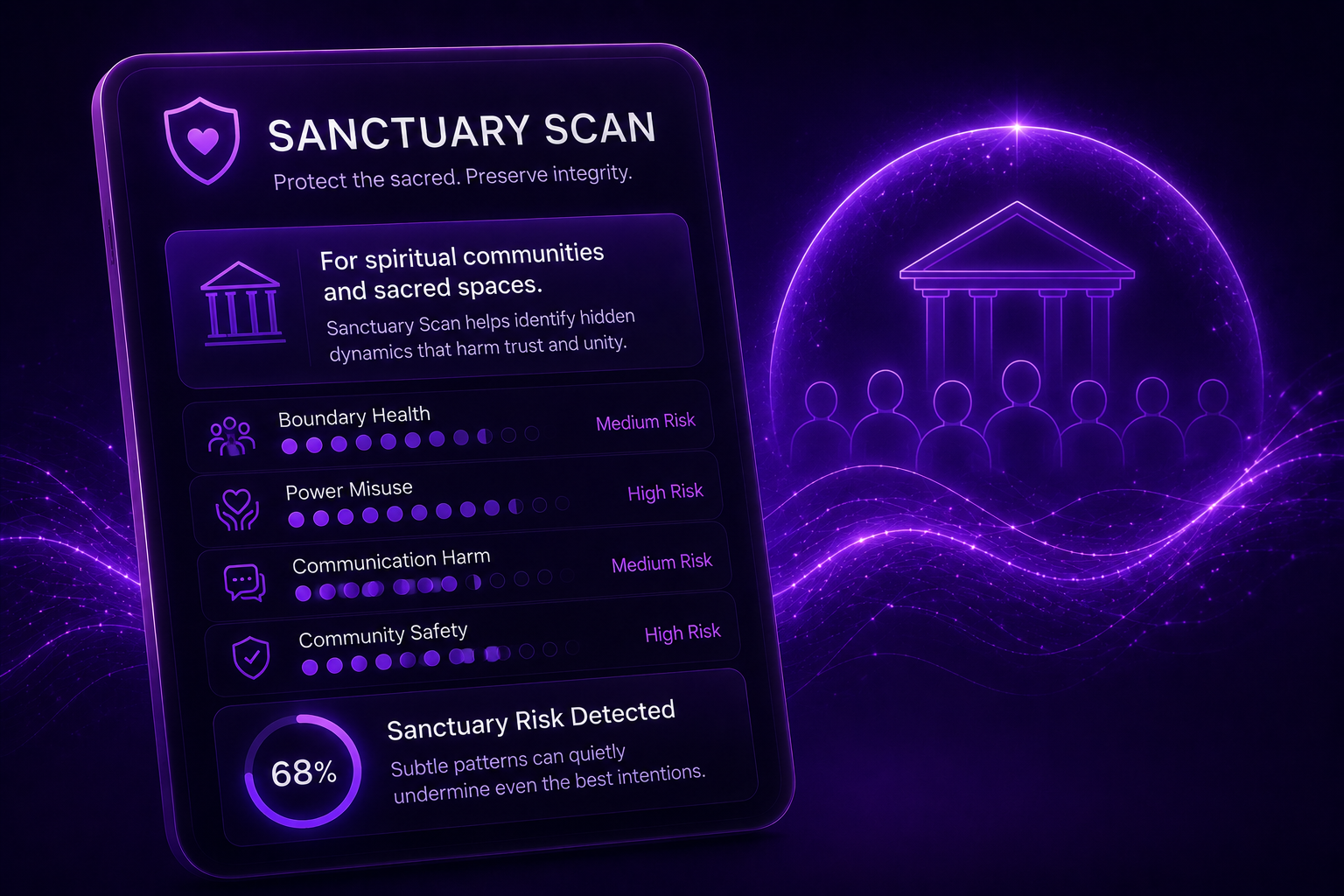
For members of spiritual communities
Identify when devotion tips into control. Sanctuary Scan reveals high-control behaviours, shifting boundaries and unhealthy power dynamics in spiritual and transformational communities.
Sanctuary Scan is coming soon. Join the waitlist to be notified when it becomes available.
What happens next:
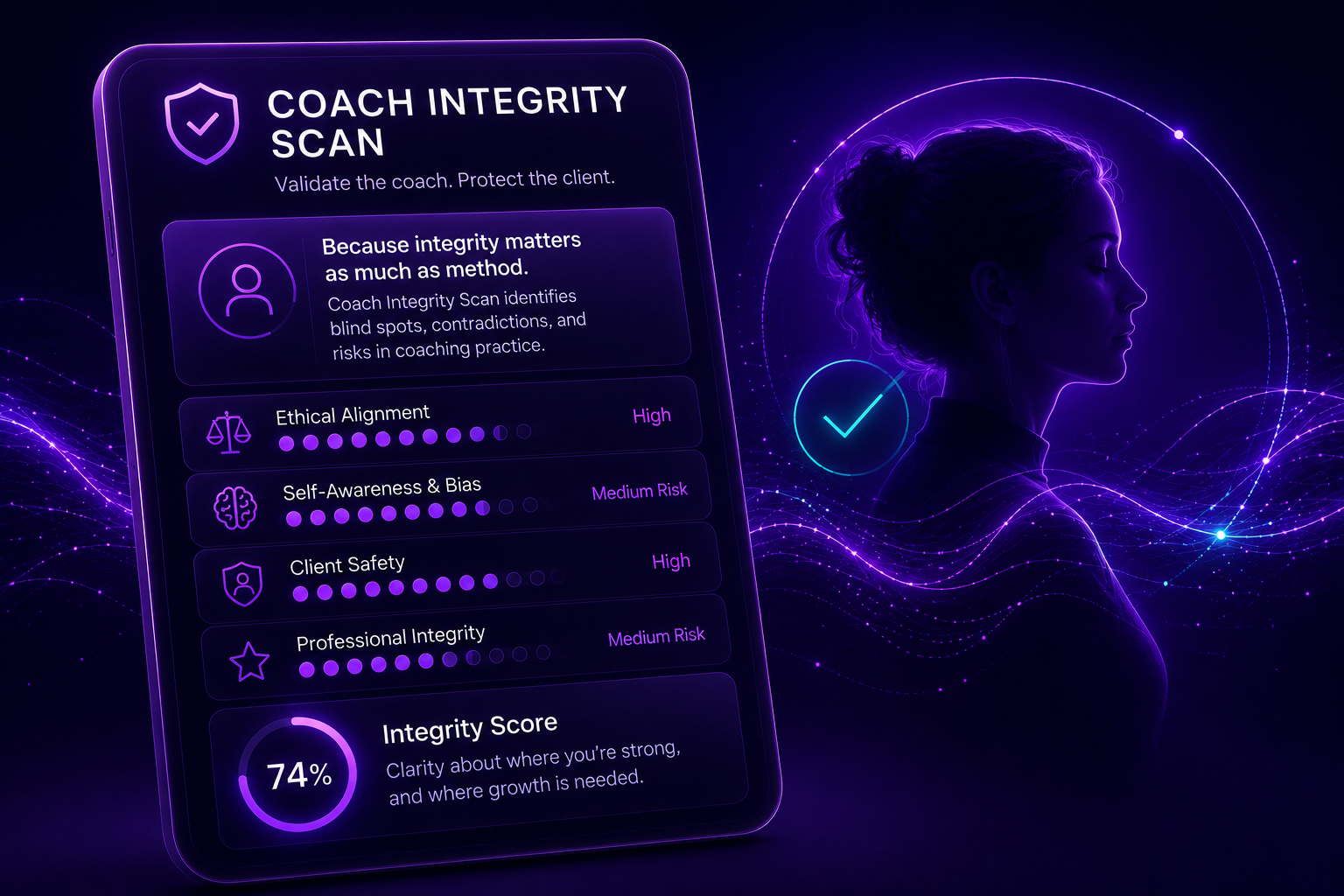
For coaching clients
See when a coaching relationship crosses professional lines. Coach Integrity Scan identifies boundary violations, power imbalances and the moments where transformation begins to tip into control.
Coach Integrity Scan is coming soon. Join the waitlist to be notified when it becomes available.
You’ve been in this relationship for years. There has been no single incident you could describe to a friend that would sound bad enough to explain how you feel.
Nobody has hit you.
And yet you have slowly become someone you don’t recognise.
Anxious. Rehearsing conversations before you have them. Apologising by reflex. Checking your phone to see what mood is arriving home. Second-guessing everything you say before you say it.
You’ve been told, over and over, that you’re imagining things, being too sensitive, misremembering, overreacting. After enough years of that, you half believe it.
The question you’re actually asking isn’t “is this abuse?” It’s “am I going mad?”
Your self-trust is the thing that has been damaged, and it’s the thing you want back.
You’re trying to assess your own reality using your own perception. And your perception is precisely the instrument that has been worn down.
The harder you think about it, the deeper in you go. Effort makes the fog worse, not better.
Every piece of advice says “trust your gut.” But your gut is the casualty. Your instincts have been the target of this pattern for so long that “trust yourself” is the least useful sentence anyone can say to you right now.
Your messages, though, are a fixed record. They don’t change their story afterwards.
Validate reads real communication — texts, emails, WhatsApp threads, DMs — and identifies toxic and abusive behaviour patterns.
Gaslighting. Manipulation. Guilt-tripping. Isolation. Boundary violations. The hot-and-cold treatment that keeps you off balance. The way your words get twisted back on you. The incidents that sound petty when you try to explain them but feel devastating when they’re happening.
It doesn’t diagnose him. It doesn’t diagnose the relationship. It labels specific behaviours.
For each behaviour it identifies, Validate:
So the system isn’t asking you to believe it. It’s showing you where to look.
One ambiguous message shouldn’t become a verdict on another human being. But a repeated behavioural pattern appearing across months of communication is something different.
In my experience, people experiencing coercive control encounter dozens of incidents before they even access help. Some of the women I’ve worked with have been questioning what’s happening for five years or more.
Those numbers aren’t about you being slow, weak, or in denial. They’re about the fog. About how hard it is to see a pattern when you’re standing inside it, when every incident can be explained away one at a time.
You’re not imagining it. You’re not overreacting. You’re not going mad.
It’s not you. It’s the fog.

Tuesday clarity. Thursday fog.
You know this client. She gets clear in your session. Decides what she wants. Sets a boundary. Sees the pattern. Goes home.
By Thursday she’s back in the fog, explaining him away, softening the boundary, rewriting what happened. You can see the pattern. She cannot see it yet.
And you’re starting to wonder: is this resistance? Poor boundaries? Attachment wounds? Or is something else happening at home that’s undoing everything you’re doing together?
Standard relationship work — more communication, better boundaries, self-worth exercises — is safe in a healthy relationship. In a controlling relationship, it can make things worse.
When you tell someone in a coercive dynamic to “communicate their needs more clearly,” you may be sending them home to articulate a boundary to someone who will punish them for having one. When you work on their self-worth, the controller hears confidence and escalates the undermining.
The client who keeps resetting isn’t resistant. She’s going home to someone who has spent years learning exactly how to undo her clarity. That’s not a flaw in your technique. That’s coercive control doing what it’s designed to do.
“I don’t want to be the only one who can see it.”
You sense something more than relationship difficulty is happening. But you’re relying on your gut, your questions, your ability to read between the lines. You’re trying to help her see what you see, and it feels like you’re pushing.
If you’re wrong, you’ve pathologized an ordinary relationship. If you’re right and you don’t name it, she could still be in the same situation in two years saying the same things.
You want something you and your client can both look at. Something objective. Something that doesn’t depend on your instinct or her memory.
Independent, verified evidence that neither of you are guessing about.
Your client uploads her communications. Validate analyses them against clinical frameworks and returns a structured reading: behaviours identified, severity ranked, confidence stated, exact source material cited.
If control is present, you can name it safely. If it’s not, you both get relief in the other direction. You’re no longer the only one who can see it. You’re both looking at the same thing.
Qualified relationship practitioners: coaches, therapists, counsellors, hypnotherapists, and similar professionals who already hold benchmarked certification in a recognised modality.
The modality itself doesn’t matter. We want to attract a wide range so end users have choice. What matters is that you’re already trained, already working with clients in difficult relationships, and ready to add this level of discernment to your practice.
Join the practitioner waitlist for Validate Certified Practitioner training, opening soon. Once certified, you’ll be listed in the practitioner directory, equipped to interpret Validate output for your clients, and able to work confidently with the women already sitting in front of you.

You investigated. You found nothing. The problem got worse.
Someone filed a grievance. HR followed the process. The keyword search came back clean. The investigation asked people to remember what was said six months ago, and nobody could quite recall the exact words.
Case closed. No evidence of wrongdoing. And the person who complained just handed in their notice.
Because the harm isn’t in one incident. It’s in the pattern across hundreds.
Surveys ask people to recall moments. Grievance procedures capture single events. Keyword searches find what you already know to look for.
Someone follows the process correctly, writes down what happened, and watches their strongest evidence turn trivial in the telling.
“You sound petty when you list them.”
One comment about someone’s accent. One question about childcare arrangements. One interruption in a meeting. One joke that landed wrong.
Individually, each one can be explained. Perhaps they didn’t mean it that way. Perhaps it was taken out of context. Perhaps the complainant is being oversensitive. But put two years of those moments next to each other and you’re no longer looking at isolated incidents. You’re looking at a trajectory.
Who is being interrupted more? Whose ideas are being credited to someone else? Whose concerns are being dismissed as “not a culture fit”? Who is being asked to prove themselves repeatedly while others are given the benefit of the doubt?
A single incident is debatable. A trajectory is much harder to argue with.
CultureScan reads workplace communications. Slack threads, email chains, Teams messages, meeting transcripts. Across time. And it identifies patterns of bias, microaggressions, microinvalidations, power dynamics, bullying, and exclusion.
It doesn’t judge whether someone is a good person or a bad person. It identifies behaviours. It makes a pattern visible.
For each behaviour identified, CultureScan:
So you’re not relying on someone’s memory of what happened six months ago. You’re looking at the actual record.
On 26 October 2024, the Worker Protection Act came into force, creating a new legal duty for employers to take reasonable steps to prevent sexual harassment.
On 30 October 2026, that duty rises to all reasonable steps, and liability extends to harassment by third parties.
Reasonable steps used to mean having a policy. All reasonable steps means being able to demonstrate you looked for the problem, not just waited for someone to report it.
And on 1 September 2026, FCA conduct rules extend to non-financial misconduct across roughly 37,000 firms.
The question is no longer “did someone complain?” The question is “did you look?”
Employment solicitors preparing tribunal disclosure who are facing 30,000+ messages and need to identify the pattern before witness statements are exchanged.
HR and compliance teams building the evidence base for risk assessments, preparing for the new duty, or investigating concerns where the grievance process has returned nothing but the problem persists.
Organizations that want to understand what’s actually happening in their communications before it becomes a tribunal, a resignation, or a reputation problem.
Individuals who know something’s off but have no language for it yet. You’re being pushed out, sidelined, or undermined, but every time you try to explain it, it sounds like you’re being oversensitive. You’re not. There’s a pattern. This finds it.

Keynotes and workshops on discernment, control, consciousness and judgement, for conferences, professional bodies, and in-house teams.

The Conscious Edge is my weekly newsletter on the patterns running underneath coaching, business, AI and consciousness. Written for people who would rather see the mechanism than be told how to feel.
Most of what I notice never makes it onto a stage. It goes here first.
Most weeks you will finish it able to name something you had previously only been able to feel. That is the whole point of it.