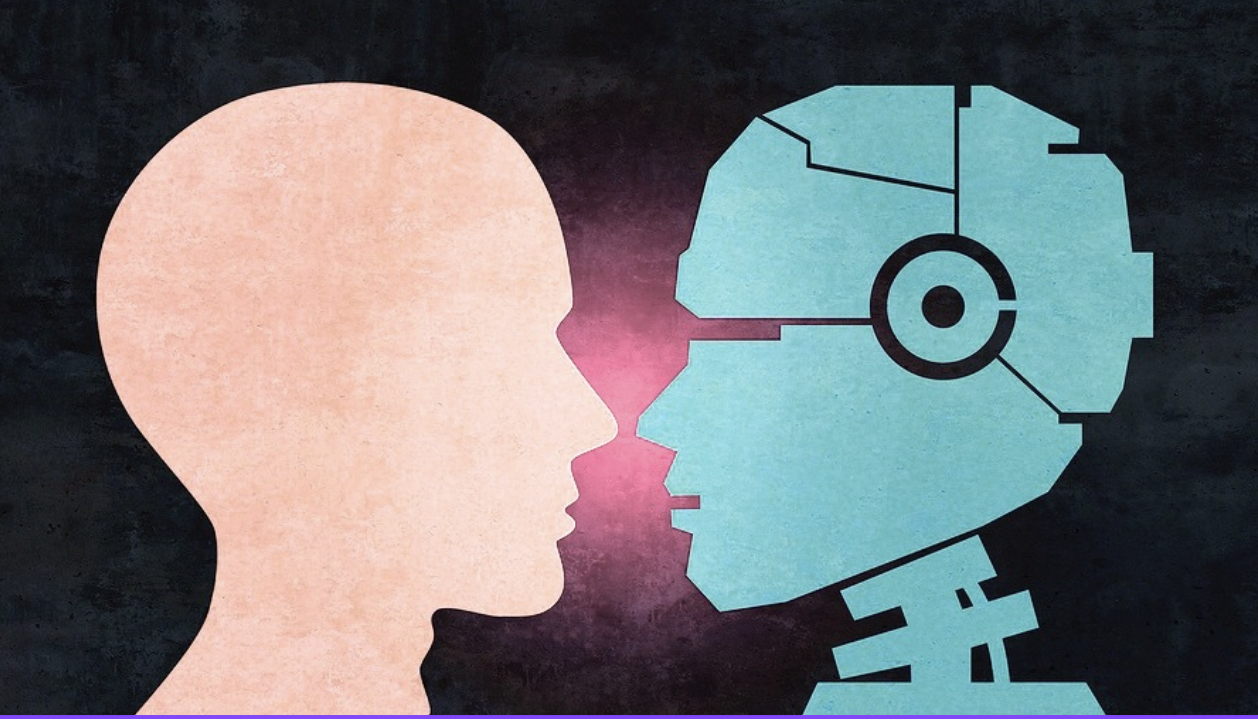


A recent Forbes analysis of around 6,000 conversations with an AI coach reported something the coaching profession has been circulating with a certain amount of enthusiasm. Entrepreneurs, it found, tell AI things they will not tell people. Fear of success. Uncertainty about direction. Difficulty holding boundaries. And, most revealingly, boredom with their own clients.
That last one is worth pausing on. Fear of failure gets said out loud constantly. It is socially acceptable, almost fashionable. Boredom with the people paying you is different. It sounds ungrateful and it sounds like decline, and no experienced practitioner says it in a peer group. They said it to software, late, with nobody watching.
The finding is real and I think it is being read too generously. What it measures is the disclosure threshold, and the disclosure threshold drops for reasons that have nothing to do with the quality of what is on the other side.
Why the door opens so easily
People have been telling the truth to non-humans for a very long time. Confessional booths were designed around a screen. Anonymous surveys reliably produce more honest answers than interviews. Diaries have always received material that never reaches another person. The mechanism is subtraction rather than skill: remove the observing face, the relationship at risk, the reputation being managed, and disclosure becomes easier.
An AI coach benefits from every one of those conditions by default. It does not have to be good at anything to receive a confession. It only has to be there and not be a person.
So when I read that founders disclose more freely to AI, I do not read it as evidence that AI coaching works. I read it as an accurate description of an interface. Whether anything useful happens next is an entirely separate question, and the analysis does not address it.
The sixty seconds that decide the session
Anyone who has practised seriously for a decade knows that getting the client to the true thing is the opening move. It is not trivial, but it is learnable, and most competent practitioners can do it inside twenty minutes with a reasonably willing client.
What determines whether the session changes anything is the sixty seconds afterwards.
The client has just said something they have never said. At that moment there are at least four available responses. You can name it directly and hold them to it. You can say nothing and let the silence do the work. You can redirect to something apparently unrelated that they mentioned earlier, because the disclosure was a decoy and the real material is behind it. Or you can deliberately let it pass, because they are not ready and pushing will close them for the next three sessions.
Four choices. Four completely different sessions. Four different outcomes six months later.
And here is the part that matters for this conversation: an experienced practitioner does not deliberate. The choice arrives. It arrives because several hundred structurally similar moments have accumulated into a pattern library, and the library resolves the situation faster than conscious reasoning could. That resolution is the actual expertise. Everything else is scaffolding around it.
What research on expertise says about this
This is not a mystical claim, and there is a substantial literature underneath it. Work on tacit knowledge extraction published on arXiv in 2026 documents the core difficulty precisely: successful expert execution depends not only on explicit instructions but on implicit assumptions, contextual constraints, embodied skills and experience-based judgements that are rarely documented. The paper is written about procedural technical domains, and every word of it applies to practitioner work.
The California Management Review made the commercial version of the argument in March 2026 under the heading that tacit knowledge is your next competitive moat. Their point was that as generative systems commoditise everything that has been written down, the durable advantage sits in the judgement that has not been. For a coaching or therapeutic practice, that is not a strategic nicety. It is a description of where the entire value of the practice lives.
So we have a profession whose core asset is, by definition, undocumented, being offered tools that can only operate on documentation.
Which method is waiting on the other side
Put those two things together and the question about AI coaching sharpens considerably.
Clients will open up to machines. That is settled, and the data is now reasonably good. The question worth asking is what the machine does with the disclosure once it has it.
Most tools currently available to practitioners were built by training a model on material the practitioner had already produced. Content, courses, recordings, published writing. That material is genuine and it is the articulated surface of a practice. Trained on it, a model reproduces the articulated surface with reasonable fidelity. Ask it to handle the sixty seconds after a real disclosure and it does what it has been equipped to do, which is respond generically, because the judgement sequence was never in the training data. It was never anywhere.
Practitioners then try these tools, find them thin, and conclude that AI cannot do depth work. I understand the conclusion and I think it is the wrong one. The system performed exactly as well as its input permitted. It was handed the visible layer of a practice and asked to behave like the practice.
Where this leaves the experienced practitioner
If your value sits in judgement that you have never written down, you have two problems and one opportunity.
The first problem is that you cannot currently hand that judgement to anything, human or machine. It does not scale, it does not delegate, and it does not survive you.
The second problem is that the tools being marketed to you are optimised for the material you already have, because collecting existing content takes an afternoon whilst surfacing unconscious decision logic takes structured work over weeks. The market has priced accordingly.
The opportunity is that almost nobody is doing the surfacing. The practitioners with the deepest pattern libraries, the ones with twenty years and several thousand hours behind them, hold the most valuable and least accessible asset in the profession. Making it explicit is a specific piece of methodological work, and once it exists in described form, everything downstream becomes possible, including but not limited to AI.
The open door and the empty room
I keep coming back to the image. The research shows us an open door. People will walk through it and say things they have never said. That is genuinely significant and I do not want to diminish it.
But a door is only worth having because of what is behind it. If the room is empty, the disclosure is just a secret that has been collected rather than worked.
The interesting question for our profession over the next few years is not whether clients will talk to AI. It is whose method is standing in the room when they do.