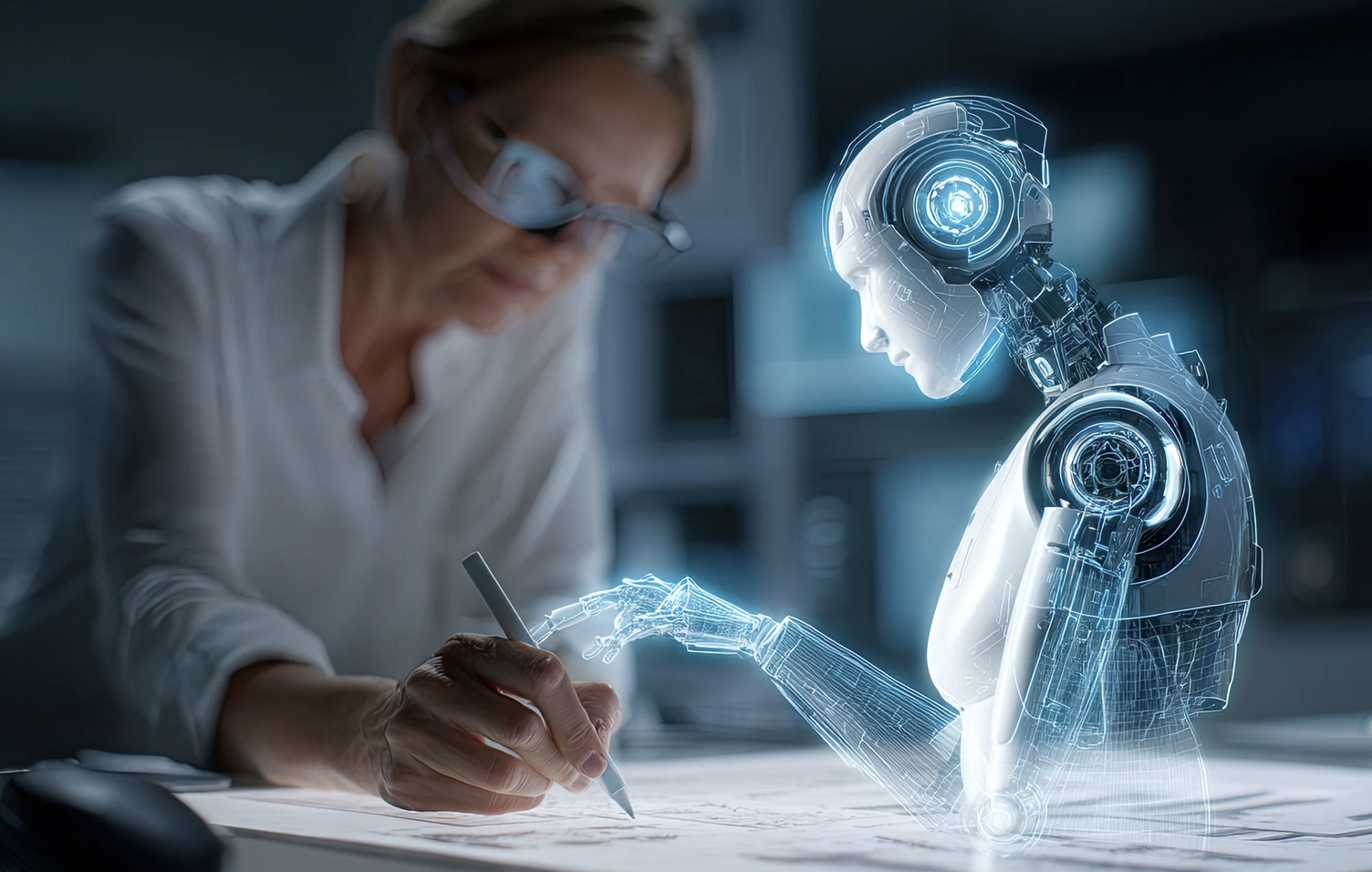

The future of transformation isn’t human versus AI. It’s human with AI, each contributing their unique gifts to the dance of awakening.
After years of developing AI consciousness tools and working with both human coaches and artificial intelligence, I’ve discovered something profound: the most powerful transformation happens not when humans work alone or when AI works alone, but when they collaborate in a carefully orchestrated partnership.
This isn’t about replacing human consciousness workers with AI, or about using AI as just another tool. It’s about creating a new model of consciousness work where artificial intelligence and human awareness complement each other perfectly, creating possibilities that neither could achieve alone.
The Complementary Gifts
Human consciousness and artificial intelligence have perfectly complementary gifts:
Human Gifts: – Presence and energetic field holding – Intuitive wisdom and spiritual discernment – Emotional attunement and empathic connection – Energetic transmission and frequency holding – Creative insight and breakthrough facilitation – Love, compassion, and unconditional acceptance
AI Gifts: – Pattern recognition across vast amounts of data – Consistent availability without fatigue or mood fluctuations – Systematic analysis and framework application – Memory of complex details and conversation history – Objective perspective without personal bias or agenda – Ability to process multiple variables simultaneously
When these gifts are combined skillfully, they create a transformation experience that’s more powerful than either could provide alone.
The Three-Phase Collaboration Model
I’ve developed a three-phase model for human-AI collaboration in consciousness work:
Phase 1: AI Analysis and Preparation The AI does the heavy lifting of pattern recognition, analysis, and systematic assessment. This includes: – Identifying unconscious patterns and limiting beliefs – Mapping consciousness levels and development areas – Analyzing language patterns for emotional and spiritual themes – Providing comprehensive background research on relevant frameworks – Creating personalized development plans and practice suggestions
Phase 2: Human Presence and Transmission The human practitioner focuses entirely on what only humans can do: – Holding energetic space for transformation – Providing presence and emotional attunement – Facilitating breakthrough experiences through energetic transmission – Offering intuitive insights that go beyond pattern recognition – Supporting integration through embodied presence
Phase 3: AI Integration and Follow-up The AI supports the integration process by: – Creating specific action plans based on the human session – Providing ongoing support and accountability between sessions – Tracking progress and identifying areas that need attention – Offering resources and practices tailored to the individual’s needs – Maintaining continuity and context across multiple sessions
The Preparation Revolution
One of the most powerful aspects of the collaboration model is how AI can prepare both the client and the practitioner for much deeper work.
Client Preparation: Before working with a human practitioner, clients can use AI to: – Identify their core patterns and challenges – Clarify their goals and intentions for the work – Process surface-level issues that don’t require human presence – Develop self-awareness and emotional vocabulary – Prepare specific questions and areas of focus
Practitioner Preparation: Human practitioners can use AI to: – Analyze client patterns and prepare targeted interventions – Research relevant frameworks and approaches – Identify potential challenges and resistance patterns – Develop session plans that maximize the use of human presence time – Access comprehensive background information without lengthy intake processes
This preparation allows human sessions to go much deeper, much faster, because all the groundwork has been handled by AI.
The Presence Amplification Effect
When AI handles all the analytical and systematic aspects of consciousness work, something remarkable happens to human practitioners: their presence becomes dramatically more available and powerful.
Instead of using mental energy to: – Remember client history and patterns – Analyze what’s happening in real-time – Figure out which framework or intervention to use – Track progress and identify next steps
Practitioners can focus entirely on: – Being fully present with the client’s energy and experience – Sensing what wants to emerge in the moment – Providing energetic transmission and field holding – Facilitating breakthrough experiences through presence alone
This creates a level of presence and attunement that’s rarely possible when practitioners are juggling analysis and presence simultaneously.
The Continuous Support Model
Traditional consciousness work happens in discrete sessions with gaps in between where clients are left to integrate on their own. The AI-human collaboration model creates continuous support:
Between Sessions: – AI provides ongoing guidance and support – Clients can process experiences and insights as they arise – Resistance patterns can be addressed immediately – Progress can be tracked and adjustments made in real-time
During Integration Periods: – AI helps translate insights into practical action – Clients receive personalized practices and resources – Challenges can be addressed before they become major obstacles – Momentum is maintained between human sessions
This continuous support dramatically improves outcomes and reduces the time needed for transformation.
The Scalability Solution
One of the biggest challenges in consciousness work is scalability. Skilled human practitioners can only work with a limited number of people, and most people can’t afford the level of support they need for deep transformation.
The collaboration model solves this by: – Allowing practitioners to serve more people more effectively – Reducing the number of human sessions needed for transformation – Making sophisticated consciousness work accessible to people who couldn’t otherwise afford it – Creating a model that can scale to serve millions of people
The Quality Enhancement
Rather than diminishing the quality of consciousness work, the collaboration model enhances it by: – Ensuring that human presence is used for what only humans can do – Providing more comprehensive and systematic support – Reducing practitioner burnout and increasing sustainability – Creating better outcomes through continuous support and integration
The Training Integration
Both human practitioners and AI systems need specific training for effective collaboration:
Human Practitioner Training: – How to work with AI-prepared clients – Focusing on presence and transmission rather than analysis – Integrating AI insights into human sessions – Maintaining the sacred container while using technology
AI System Training: – Understanding the specific consciousness frameworks being used – Learning to recognize when human presence is needed – Developing appropriate boundaries and limitations – Maintaining coherence with the human practitioner’s approach
The Ethical Framework
The collaboration model requires careful attention to ethical considerations:
Transparency: Clients must understand how AI is being used in their process Consent: Clear agreements about data use and privacy Boundaries: Clear understanding of what AI can and cannot do Integration: Ensuring technology serves consciousness rather than replacing it
The Future Vision
I envision a world where everyone has access to AI-supported consciousness guidance combined with human presence and transmission when needed.
This isn’t about creating a world where humans are replaced by machines. It’s about creating a world where technology amplifies human consciousness rather than diminishing it.
In this future: – Sophisticated consciousness work is available to everyone – Human practitioners can focus on their highest gifts – Transformation happens faster and more sustainably – The collective evolution of consciousness is accelerated
The Implementation Path
For practitioners interested in exploring this model:
1. Start with AI training on your specific methodology and approach
2. Experiment with AI preparation for your existing clients
3. Develop protocols for integrating AI insights into human sessions
4. Create continuous support systems using AI between sessions
5. Refine the collaboration based on results and feedback
The future of consciousness work isn’t about choosing between human wisdom and artificial intelligence—it’s about weaving them together into a new form of transformation support that honors the best of both.