
When I first left, I moved into a small bedsit in North London. I had spent a long time imagining that moment. All the things I would do once I was out, once no one was controlling where I went or who I spoke to or what I was allowed to want. I had built the picture in detail.
And then I got out, and I stood in that bedsit, and I did not know what to do.
Not in the practical sense. I mean I did not know what I wanted. I could not locate the person who was supposed to have all those plans. The freedom I had imagined turned out to be a room I did not know how to live in.
This is the part of leaving that almost no one prepares you for, and it is one of the most misunderstood stages of recovery from coercive control.
Why leaving is not the same as being free
There is a widely held assumption that the hard part of a controlling relationship is getting out, and that once someone is physically safe, the difficulty is largely behind them. Get them out, and the rest follows.
It does not follow. Physical freedom and psychological freedom are two different things, and they do not arrive together.
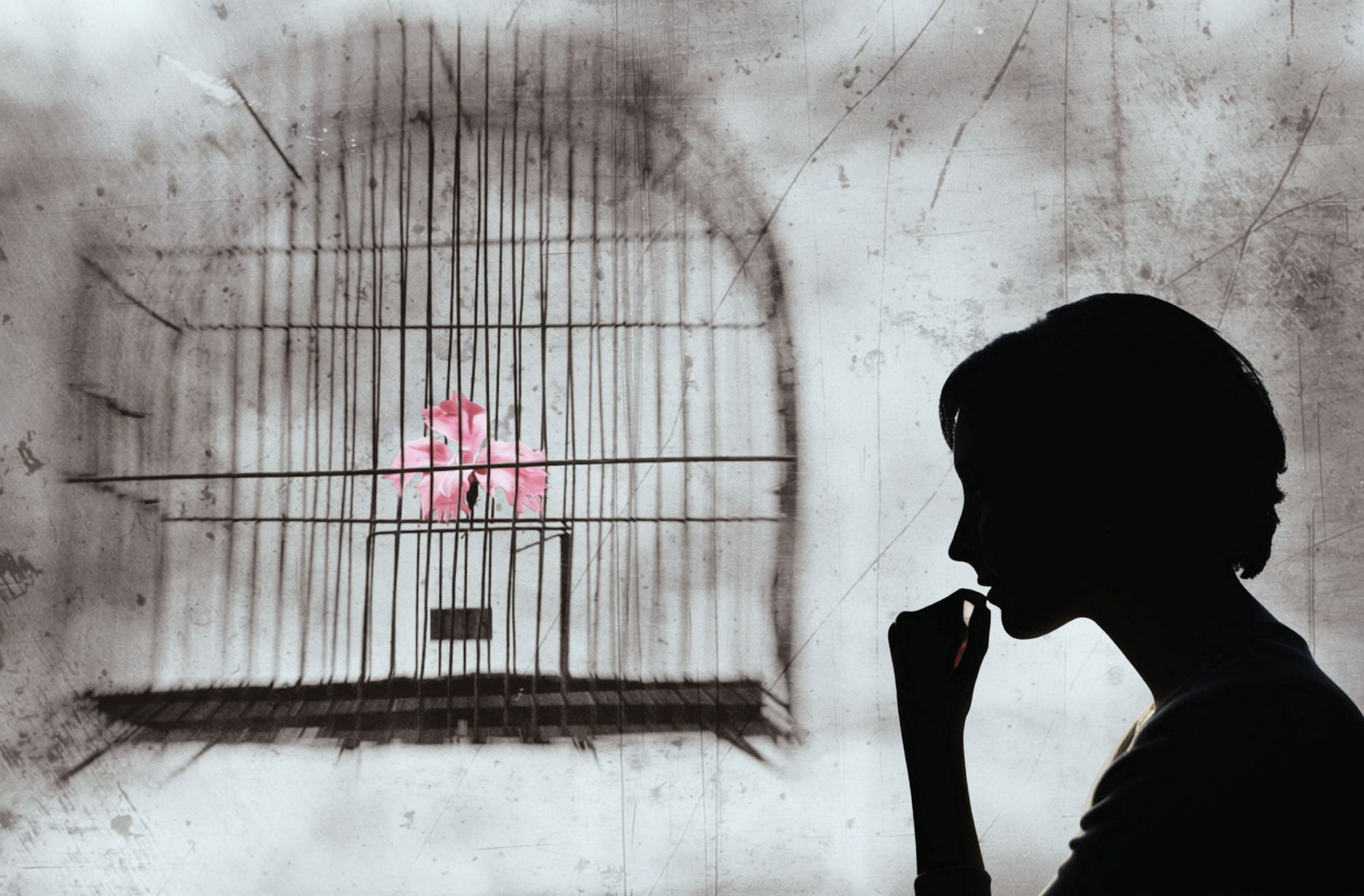
You can be out, safe, no longer monitored, no longer controlled, and still be carrying the entire structure of the relationship around inside you. The cage does not stay behind in the house you left. A significant part of it was installed internally, and it comes with you.
This is not a failure of will or a sign that someone was not really ready to leave. It is a direct and predictable consequence of how coercive control works. The control was never only external. Over months or years, it was built into the person’s own thinking, their own sense of what they were permitted to want, their own capacity to make choices without reference to someone else’s approval. Removing the external controller does not remove the internal architecture that was constructed alongside them.
What actually gets taken
To understand why freedom can feel so empty at first, it helps to be precise about what coercive control removes.
It does not simply restrict someone’s behaviour. It erodes the self that would do the choosing. Through sustained control over time, a person loses contact with their own preferences, their own desires, their own sense of what they like and want and think. Not because those things were destroyed, but because they were overwritten. A controlled identity gets built on top of the original one, and after long enough, the original becomes genuinely hard to locate.
I could not tell you, in that bedsit, what my favourite food was. That sounds trivial. It is not. It is a small, exact illustration of something total. When your preferences have been irrelevant for years, when wanting things of your own has been treated as a problem to be managed, you stop generating them. And then one day you are free to want whatever you like, and you reach for the part of you that wants things, and it has gone quiet.
That silence is what freedom sounds like at the start. Which is why so many people, at exactly the moment they should feel relief, feel something closer to loss.
Why this stage gets misread
The emptiness after leaving is frequently misinterpreted, by survivors themselves and by the people around them.
Survivors read it as evidence that they made a mistake, or that something is wrong with them, or that they are incapable of the freedom they fought to reach. The people around them, expecting gratitude and relief, do not understand why the person seems adrift rather than liberated. And so the survivor often adds a new layer of self-blame on top of everything else: I wanted this, I got it, and I cannot even feel it properly.
None of that is accurate. The emptiness is not a sign that freedom was the wrong choice. It is a sign of how thoroughly the self was overwritten, and how much rebuilding is now possible. The blankness is not the absence of a future. It is the space the future will be built in.
But it does not feel that way from inside it, and telling someone it will get better is rarely useful in that moment. What helps is understanding that this stage is normal, expected, and part of the mechanism, rather than a personal deficiency.
Where rebuilding actually starts
When I work with people at this stage, I do not start with the big questions of purpose or identity or what they want their life to mean. Those questions are too large for a self that is still coming back online. I start with the smallest possible acts of choosing.
What do you want for dinner. What do you want to watch. What time do you want to get up. Milk in your tea or not. These are not trivial exercises to pass the time. They are the mechanism by which the capacity to want is rebuilt, one small selection at a time.
And critically, there is no wrong answer. If you choose something and find you do not like it, that is not a failure. That is information. You have learned something true about yourself, which is exactly the thing that was taken. Every small choice, including the ones that turn out badly, is a reclaimed piece of the self that does the choosing.
This is slow. It is supposed to be slow. The self that was overwritten was not overwritten in a day, and it does not return in one either. But it does return. The person who could not name a favourite food eventually can, and then can name a great deal more than that, because the machinery that generates preferences has been switched back on.
The freedom that felt empty was never actually empty. It was quiet, because the person who was going to fill it was still finding their way back. Freedom, real freedom, is not the moment you get out. It is the slower thing that comes after: the return of your right to be the author of your own life, one small choice at a time.