
What if the most powerful force shaping your life is something you can’t see?
Not dramatic. Not obvious. Not something you could point to and say, “That’s the problem.” The most effective forms of control rarely look like control. They feel like care, logic, or just a normal conversation. And that’s precisely why they work.
This is where the study of AI and human behaviour gets truly fascinating—and profoundly unsettling. For the first time, we have technology capable of exposing the invisible patterns that shape our relationships, our workplaces, and even our inner dialogue. Once you see them, you don’t just understand more. You become free.
What Does AI and Human Behaviour Really Mean?
This is not about chatbots writing emails. It’s about using artificial intelligence to detect and decode behavioural patterns that we can feel but cannot clearly identify, describe, or prove.
For decades, psychology has documented phenomena like coercive control, emotional manipulation, gaslighting, and trauma bonding. But in real life, these don’t arrive as textbook examples. They show up as a comment that feels slightly off, a conversation that leaves you unsettled, or a dynamic you can’t explain but can’t ignore either.
You sense something is wrong, but you can’t name it. And without language, you can’t act on it.
AI changes this equation. Through natural language processing and sentiment analysis, AI can give language to what you’ve only ever been able to feel. It labels the pattern hidden inside the moment. It defines—and in some cases quantifies—what was previously invisible. You no longer have to rely on guesswork, self-doubt, or the nagging fear that you’re “overthinking things.”
Why Understanding AI and Human Behaviour Matters More Than You Think
Nobody consciously chooses a toxic relationship, a manipulative boss, or a belief system that keeps them small. Yet people end up in these situations every day—not because they’re weak, but because the system they’re inside is invisible while it’s happening.
Research supports just how difficult it is for humans to spot manipulation. Studies have found that people detect manipulative content with only 50–52% accuracy—barely better than guessing at random. The most effective control doesn’t force you. It guides you subtly, consistently, over time, until your perspective shifts, your confidence erodes, and your reality changes without you noticing.
This is why people ask, “How did I end up here?” What AI behaviour analysis does—what makes it truly groundbreaking—is answer that question with precision. Not with opinion or vague advice, but with clear, observable patterns.
The Invisible Problem: Why Humans Miss Behavioural Patterns
Human awareness has hard limits. At any given moment, your brain is filtering information, prioritising threats, and maintaining social harmony. This means you are only consciously tracking a fraction of what’s actually happening around you. The rest slips through—quietly, systematically.
This is how invisible behaviour patterns take hold: one comment at a time, one interaction at a time, one small shift at a time. Until what once felt wrong starts to feel normal. It’s like fog rolling in—you don’t realise your visibility is gone until you can no longer see clearly.
AI doesn’t have that limitation. It can track patterns across time, detect subtle linguistic shifts, and flag repeated behavioural signals that the human brain simply wasn’t designed to catch in real time. This is why AI behaviour analysis can see what we cannot.
How AI Detects Manipulation in Relationships
Emotional manipulation in relationships rarely looks like what most people expect. It doesn’t sound like aggression. It sounds like, “I just worry about you,” or “You can do what you want… I just think…” On the surface, these phrases appear caring. Underneath, they can function as isolation tactics, emotional reframing, or pressure disguised as support.
You feel the tension, but you can’t quite explain it. AI can. Using natural language processing and pattern recognition, AI tools can identify recurring manipulation tactics across conversations—including blame-shifting, reality distortion, and emotional invalidation—that humans detect with barely better accuracy than chance.
When AI identifies the pattern, labels it, and explains it, you are no longer guessing. You have clarity. And with clarity comes the power to act.
How AI Reveals Invisible Patterns in the Workplace
Workplace manipulation is often even harder to name than relationship manipulation. There’s no shouting, no obvious conflict—just small, almost invisible moments. Your idea gets redirected, your contribution is diluted, your reaction is subtly invalidated.
Individually, each incident is easy to dismiss. Collectively, they cause you to shrink. This is how environments shape behaviour without anyone realising it—not through force, but through patterns no one can see clearly enough to challenge.
AI behaviour analysis changes this dynamic. By examining communication patterns across emails, messages, and meeting transcripts, AI can surface the recurring micro-dynamics that create toxic cultures—giving individuals and organisations the evidence they need to create real change.
5 Benefits of Understanding AI and Human Behaviour
1. You Get Clarity—Fast
No more “something feels off, but I don’t know why.” AI identifies the specific pattern behind the feeling, turning confusion into understanding.
2. You Regain Trust in Yourself
You realise your instincts were right all along—you just didn’t have the language. AI provides that language, validating what your body already knew.
3. You Stop Internalising the Problem
When you can see the pattern, you stop blaming yourself. You understand that the issue was the dynamic, not a personal failing.
4. You Become Resistant to Manipulation
Once you can identify a manipulation tactic, it loses its power. Awareness is the most effective defence against coercive control and emotional manipulation.
5. You Step Into Real Power
Not control over others—but clarity within yourself. And clarity is the foundation of genuine personal freedom.
How to Use AI to Identify Behavioural Patterns in Your Life
This is not theoretical—it’s practical and immediately usable. Here are five steps to begin:
Capture what’s actually happening. Messages, emails, and conversations are your data. Save the interactions that leave you feeling uneasy.
Look for patterns, not isolated moments. A single interaction means little. Recurring patterns reveal everything.
Take your discomfort seriously. That subtle “something’s off” feeling is a signal, not a weakness. Research consistently shows that our intuition about manipulation often precedes our conscious understanding.
Use AI as a mirror. Not to tell you what to think, but to show you what’s there. AI tools can process your communications and reflect back the patterns that are difficult to see when you’re inside them.
Act on what you see. Awareness alone is not enough. Insight must become action—whether that means setting boundaries, seeking support, or beginning the deeper work of emotional transformation.
The Real Breakthrough: AI Reveals What You’re Doing to Yourself
Here’s the part most people don’t expect. The most powerful thing this technology reveals is not just what others are doing to you—it’s what you’re doing to yourself.
The beliefs you didn’t consciously choose. The rules you absorbed from childhood. The inner voice that feels like truth, but may simply be conditioning. Much of human limitation comes from invisible internal programming that shapes our thoughts, emotions, and behaviours beneath conscious awareness.
AI can map these internal patterns too. Not to judge you, but to show you what’s running beneath the surface, where it came from, and whether it’s still serving you. This is the foundation of the Conscious Emotional Transformation (CET) approach—going beyond surface-level awareness to clear emotional blocks at their source and create lasting, measurable change.
This is where the real transformation begins.
Frequently Asked Questions About AI and Human Behaviour
Can AI really detect emotional manipulation?
Yes. AI tools using natural language processing and sentiment analysis can identify manipulation tactics such as gaslighting, blame-shifting, and emotional invalidation by analysing word patterns, emotional tone, and conversational context. While AI works best as a complement to professional support, it offers a level of objectivity that humans often struggle to maintain during emotional interactions.
How accurate is AI at spotting behavioural patterns?
AI pattern detection has shown significant promise, with some systems reporting high accuracy rates for identifying deceptive behaviour and manipulation tactics. However, accuracy improves substantially when AI examines patterns across multiple conversations rather than isolated incidents. The technology is most effective as a tool that flags patterns for human reflection and professional guidance.
Can AI help me understand my own unconscious patterns?
Absolutely. Beyond detecting external manipulation, AI can help surface internal behavioural patterns—recurring thought loops, self-limiting beliefs, and emotional responses that operate beneath conscious awareness. When combined with a structured approach like Conscious Emotional Transformation (CET), this awareness becomes the starting point for genuine, lasting change.
Is AI replacing therapists or coaches?
No. AI is a powerful pattern-detection tool, but it does not replace the nuanced understanding, empathy, and guidance of trained professionals. Think of AI as a diagnostic mirror—it can show you what’s happening, but a skilled practitioner helps you understand why and guides you through the transformation process.
Where can I learn more about how this works in practice?
CETfreedom offers AI-powered tools and programmes designed to help you identify and clear the emotional patterns holding you back. Visit the CETfreedom Awaken With AI membership to explore over 40 AI-powered processes for self-awareness and transformation, or start with the free CETfree group coaching programme to experience the CET method directly.
See These Patterns for Yourself
Every time people see AI reveal behavioural patterns in action, the reaction is the same: shock, then clarity, then relief. Because something they’ve felt—sometimes for years—finally has a name, a structure, and a path forward.
This is not just another tool. It’s a fundamental shift in how we understand power, influence, and human behaviour itself.
If you’re ready to see these invisible patterns clearly—both in your relationships and within yourself—explore CETfreedom’s AI-powered tools and take the first step toward genuine emotional freedom.
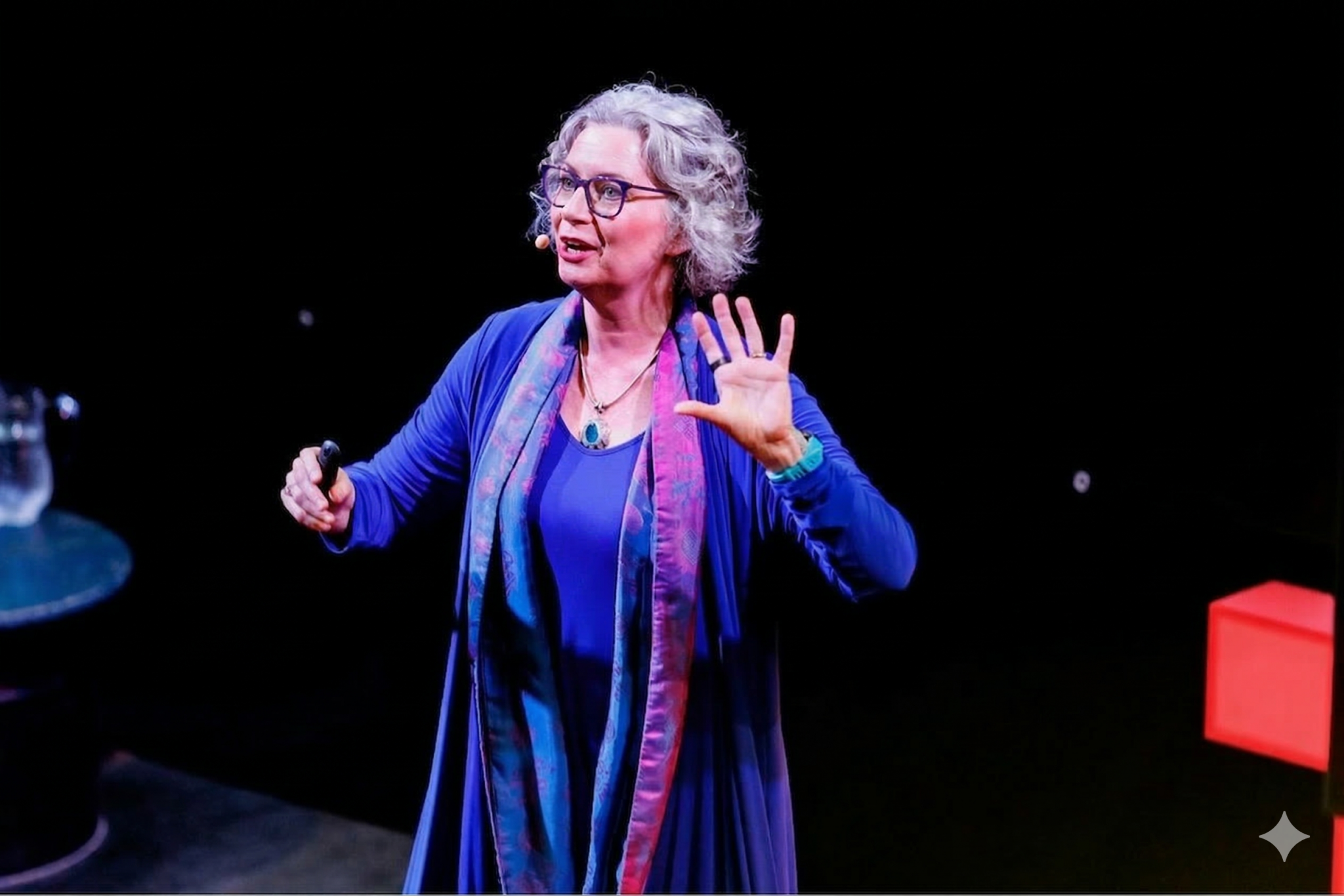
Watch Lisa deliver a powerful TEDx talk on this by getting notified when it’s released here. We are so excited for this!