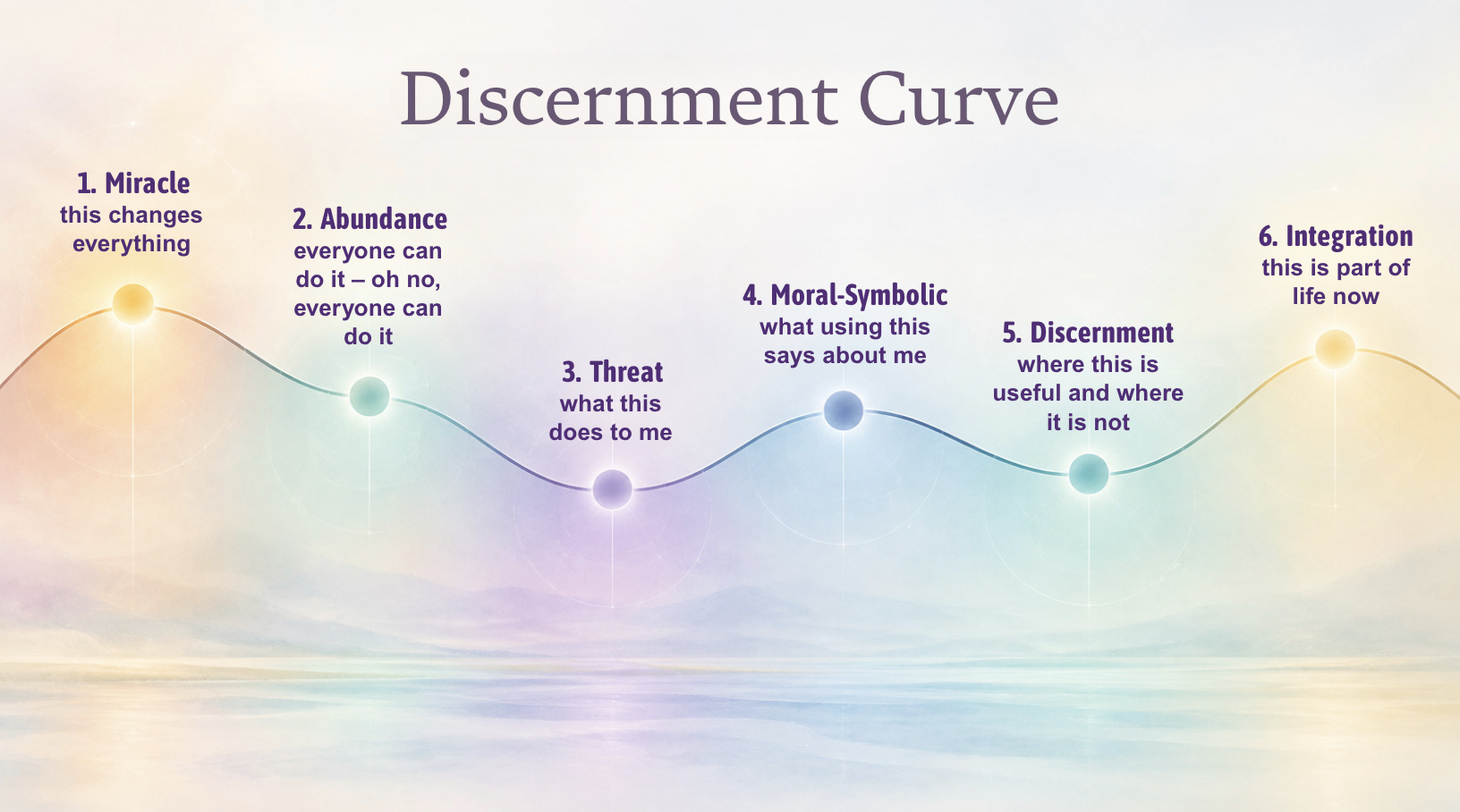


In the consciousness space, we are constantly told to “trust our gut.” It is presented as the ultimate, infallible compass. If it feels expansive, it’s a yes. If it feels contracted, it’s a no.
But for the rational mystic, this oversimplified view of intuition presents a massive problem.
Because the truth is, your gut isn’t always right. Sometimes, that tight feeling in your stomach isn’t your higher self warning you of danger; it’s your unhealed trauma reacting to a perfectly safe situation. Sometimes, that expansive, exciting feeling isn’t alignment; it’s your nervous system recognizing a familiar, toxic pattern of love-bombing.
So, if our somatic responses can be hijacked by our past, how do we use them?
The Difference Between Data and Directives
The mistake we make is treating our gut feeling as an absolute directive, rather than as a piece of data.
When you feel a sudden contraction in a coaching container, or when listening to a teacher, your gut is not necessarily saying, “This person is evil, run away.” Your gut is saying, “Hey. Pay attention. Something here matches a pattern of threat.”
If you ignore that signal—if you rationalize it away because the teacher is famous, or because everyone else is nodding—you are abandoning yourself. You are teaching your nervous system that its alarms do not matter. That is always dangerous.
But if you blindly obey the signal without investigating it, you might walk away from genuine growth just because it felt uncomfortable.
The Practice of Somatic Investigation
This is where the skill of discernment bridges the gap between the body and the mind.
When your gut fires off an alarm, your job is to pause and investigate the data. You ask yourself: What exactly am I reacting to?
Is it the content of what they are saying, or the structure of how they are saying it? Are they using coercive language? Are they collapsing boundaries? Or am I just feeling defensive because they challenged a belief I am deeply attached to?
You use your intellect to interrogate your intuition.
The Marriage of Mind and Body
We don’t need to choose between being purely logical and purely intuitive. The rational mystic requires both.
You need your gut to alert you to the subtle, energetic shifts in a room that your brain might miss. And you need your critical thinking to evaluate whether that alarm is pointing to a present danger or a past ghost.
How to Work With the Alarm
The next time you feel that somatic “no,” do not immediately react, and do not immediately suppress it.
Take a breath. Say to yourself, “I feel a contraction. That is interesting data.” Then, look at the environment objectively. Look for the structural markers of manipulation. Look for the patterns.
Investigate the Contraction
Your gut is the smoke detector. Your discernment is the firefighter who checks to see if there is actually a fire, or if you just burned the toast. Never ignore the alarm, but always verify the smoke.