

You were present. You were empathic. The session flowed… and still, something vital felt missing. What if AI could help?
Have you ever finished a session thinking, “That was fine… but something’s off”? Your client seemed satisfied. You held space beautifully. But deep down, there’s that familiar flicker of doubt: Did we actually shift anything?
This article explores that unsettling feeling — and how it might not be about skill at all. Drawing on my work in The Conscious Tipping Point and the framework of Conscious Emotional Transformation (CET), we’ll look at how technology — specifically AI — might not just support your coaching… but actually ask better questions than most humans.
Bold claim? Maybe.
Necessary conversation? Absolutely.
Let’s dive into how AI in coaching could radically upgrade the way we facilitate transformation — and why that should excite you, not scare you.
What Is a “Good” Coaching Question, Really?
Contrary to what most training manuals suggest, great questions aren’t defined by open-endedness or clever phrasing. They’re defined by impact.
In the world of transformational coaching, a powerful question doesn’t just keep the conversation going — it disrupts the pattern. It changes the field.
A good question:
- Exposes unconscious assumptions
- Differentiates perception from reality
- Interrupts looping narratives
- Invites agency and insight
- Sparks a new level of awareness
You know it’s landed when the client slows down, blinks, and says something like, “Oh. I’ve never thought of it like that before.”
These questions cut through the noise and shift something real. But even the most brilliant coach sometimes misses them.
Why? Because we’re human.
The Coaching Upgrade: How AI Might Be the Disruption We Didn’t Know We Needed
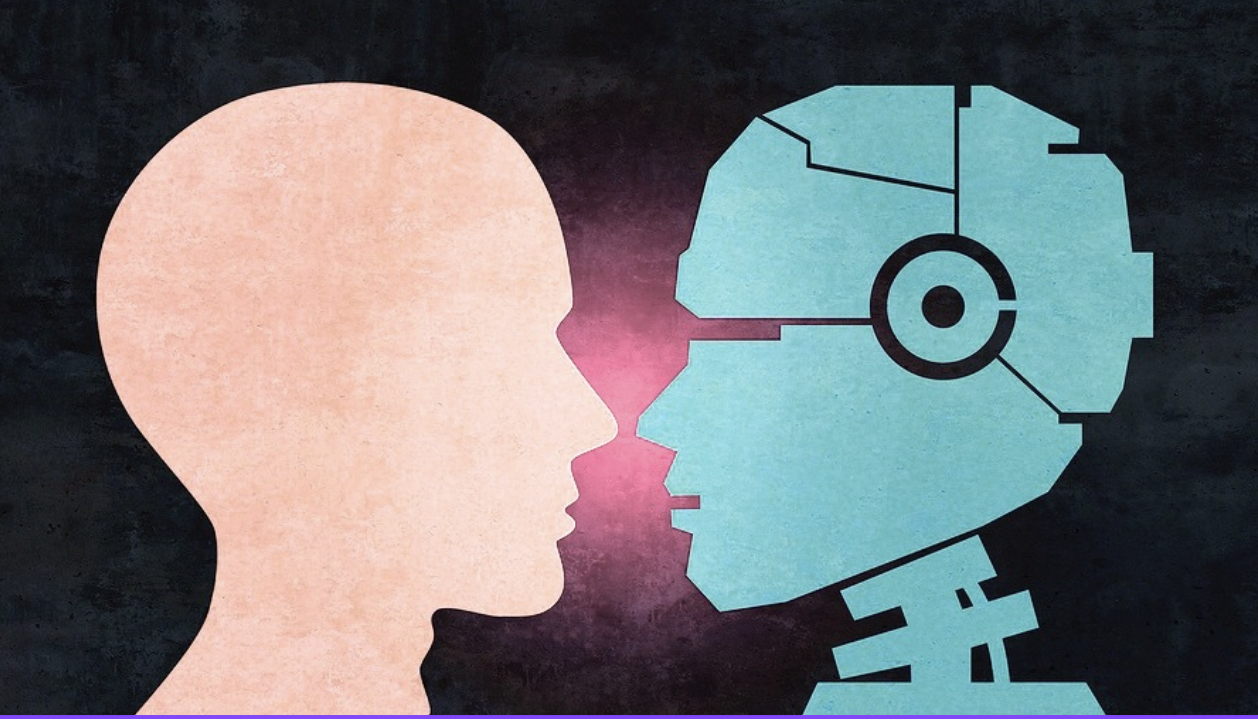
Before we go into techno-utopia mode — let’s get one thing straight: AI doesn’t replace the soul of coaching. But it can function as a pattern-tracking co-pilot. And that might be exactly what many sessions are missing.
In real-time conversations, coaches juggle:
- Active listening
- Emotional attunement
- Timing
- Recall of previous sessions
- Internal doubt
- Client expectations
Add in the noise of your own nervous system, and it’s no wonder some gold gets missed.
Now imagine an AI system designed to track patterns across language, tone, and themes across multiple sessions. A system that isn’t emotionally tired. One that gently taps you on the shoulder (metaphorically) and says: “Hey… the client just skipped over that same phrase for the third week in a row.”
That’s not replacing your intuition. That’s amplifying it.
You’re still the one holding space. But with AI, your perception is extended — beyond memory, bias, or the fatigue of being profoundly human.
The Invisible Questions: What AI Might See That We Don’t
There are questions we don’t ask simply because they don’t occur to us. Not because we lack insight, but because we’re embedded in the same mental models as our clients.
This is where AI shines — not as an oracle, but as an outsider.
It sees what we’ve adapted to ignore.
A well-trained system might detect when:
- A client consistently avoids discussing agency
- The same metaphor is repeated across weeks
- They shift into passive voice when describing their dreams
- They always laugh before talking about something painful
These patterns may not scream for attention. But they matter.
Coaching, at its highest level, is about mapping what’s hidden and unspoken — and AI can illuminate parts of that map we didn’t even realise were there.
When the Client Leaves Smiling… and Stuck — How AI Could Break the Loop
Let’s talk about the session where the client leaves smiling… but still stuck.
They felt heard. They appreciated your insight. And next week, they’re back with the same story — slightly reframed, but essentially unchanged.
This isn’t failure. It’s familiar.
The loop continues because nothing fundamentally shifted.
What breaks the cycle? Usually: a new lens. A moment of profound recognition that breaks the trance of the current narrative. A “wait, what?” moment.
AI doesn’t generate that moment — but it can suggest where to look.
In CET, we teach that transformation is not about managing emotions — it’s about rewriting the source code behind them. That requires precision. Often, the human brain can’t see its own code. But AI? It’s built to track data, themes, and hidden loops across time.
And that’s why it just might become one of the most valuable tools in a conscious coach’s toolkit.
So… Are We Being Replaced?
Absolutely not.
At CETfreedom, we believe transformation is relational. Embodied. Energetic. It requires resonance, not just recognition.
But we also believe in evolution. And part of evolving as a coach, guide, or therapist means having the courage to ask:
“Where are my blind spots? And could I be brave enough to let a machine help me see?”
If we let it, AI can help us become even more human. More intuitive. More attuned.
Not by doing the work for us, but by holding a mirror we didn’t know we needed.
Step Into What’s Next
The future of transformation isn’t either/or. It’s both/and. Both soul and structure. Both presence and pattern. Both ancient wisdom and future-forward technology.
If you’re ready to explore the future of coaching and transformation — and discover tools that integrate human resonance with cutting-edge support…
👉 Explore more at CETfreedom.com
Because your next breakthrough might not be louder… just smarter.